Nairobi County approves two monthly menstrual health days for women staff

The decision is anchored on evidence showing that menstrual health challenges, particularly dysmenorrhea, significantly affect women’s well-being and ultimate productivity at the workplace.
Nairobi County women staff will now be entitled to two days off each month after the County Executive Committee approved a menstrual health policy aimed at improving employee well-being and workplace productivity.
The policy approved on Tuesday, following a cabinet session chaired by Governor Johnson Sakaja, formally adopts two monthly Menstrual Health Days as part of Nairobi City County’s human resource framework.
According to the County Executive Committee memorandum, the decision is anchored on evidence showing that menstrual health challenges, particularly dysmenorrhea, significantly affect women’s well-being and ultimate productivity at the workplace.
More To Read
- Ombudsman orders Nairobi County to prioritise pension debts in county budget
- IPOA launches probe as family demands truth over boda boda rider’s death in Nairobi police cell
- Uhuru Park set for food, music and culture as three-day Nairobi Festival kicks off
- Nairobi orders staff to submit academic, professional records by January 15
- City Hall opens six-month window to regularise non-compliant properties
- Governor Sakaja unveils six-borough structure to enhance service delivery
The cabinet noted that 65 to 80 per cent of women experience menstrual pain, with a substantial proportion reporting symptoms severe enough to impair work performance.
“Within Nairobi City County Government, over half of the workforce is female and a significant number of whom are of reproductive age experience menstrual pain monthly, contributing to reduced productivity and increased presenteeism. Despite its prevalence and impact, menstrual health is not recognised within existing human resource policies,” reads the memorandum.
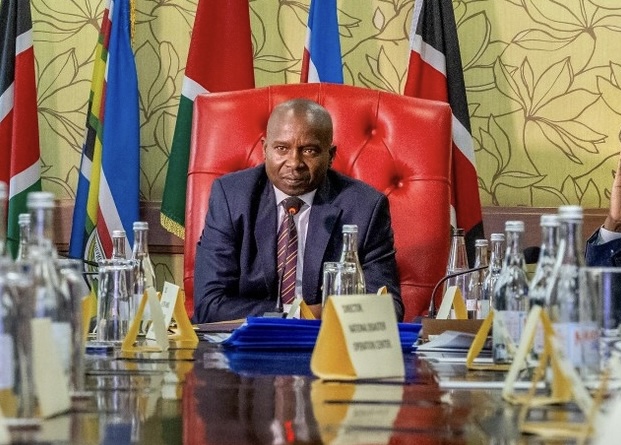
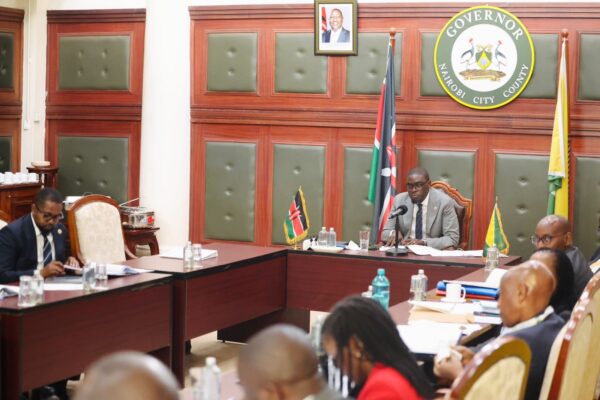 Nairobi Governor Johnson Sakaja during the County Executive Committee meeting on December 16, 2025. (Photo: City Hall)
“Consequently, many women report to work while unwell, leading to reduced efficiency, compromised service delivery, diminished staff morale, and substantial but unaccounted-for productivity losses.”
The Cabinet said the newly approved policy seeks to close this gap by allowing two monthly Menstrual Health Days, providing structured support to women employees without imposing any additional financial burden on the county.
According to the cabinet position paper, the policy is “evidence-based, preventive and aligns with the County’s commitments to gender equality, decent work and inclusive governance.”
It further notes that even modest recovery of productivity losses would yield significant organisational benefits.
According to the Memorandum, implementation of the policy will be undertaken by the Public Service Management subsector in collaboration with the County Public Service Board. The framework provides that the policy will be formalised within county human resource instruments, while clear implementation and sensitisation guidelines will be rolled out across all departments within the county executive.
Monitoring will be integrated into existing HR performance and employee well-being systems. The memorandum further states that measures will be put in place to ensure the privacy and dignity of female staff are upheld at all levels, including confidentiality, assurance of no negative impact on performance appraisals and maintenance of operational continuity for essential services through shift swaps and relief rosters.
On financial implications, the memorandum states that the policy “has no direct financial cost implications,” as implementation will be accommodated within existing administrative and HR frameworks. It adds that any minimal incidental costs will be absorbed within current sectoral budgets, with expected productivity gains outweighing such costs.
The Cabinet also cited international precedents, noting that countries with established menstrual leave entitlements include Zambia, Japan and South Korea, where the Labour Standards Act requires employers to grant one day of menstrual leave per month.
Indonesia provides for two statutory days taken on the first and second days of menstruation when pain is reported, while Spain introduced a similar measure in 2023.
Other Topics To Read
Top Stories Today